
Must have Home Products for celebrating Tulsi Vivah this year

Before discussing the products and decorations items for your home let's understand the importance of Tulsi as a plant and Tulsi Vivah as a ritual.
What is Tulsi Vivah?
Tulsi, also known as the Indian basil or the holy basil (Ocimum tenuiflorum), is often referred to in India as the Queen of Herbs which is widespread as a cultivated plant throughout the Southeast Asian tropics and Indian Subcontinent.
Shaligram is a particular variety of stone collected from riverbeds or banks of the Kali Gandaki, a tributary of the Gandaki River in Nepal, used as a personification of Vishnu.
On Tulsi Vivah day, the Tulsi plant and Shaligram are dressed like a bride and a groom, respectively, and all the rituals of a Hindu wedding are performed.
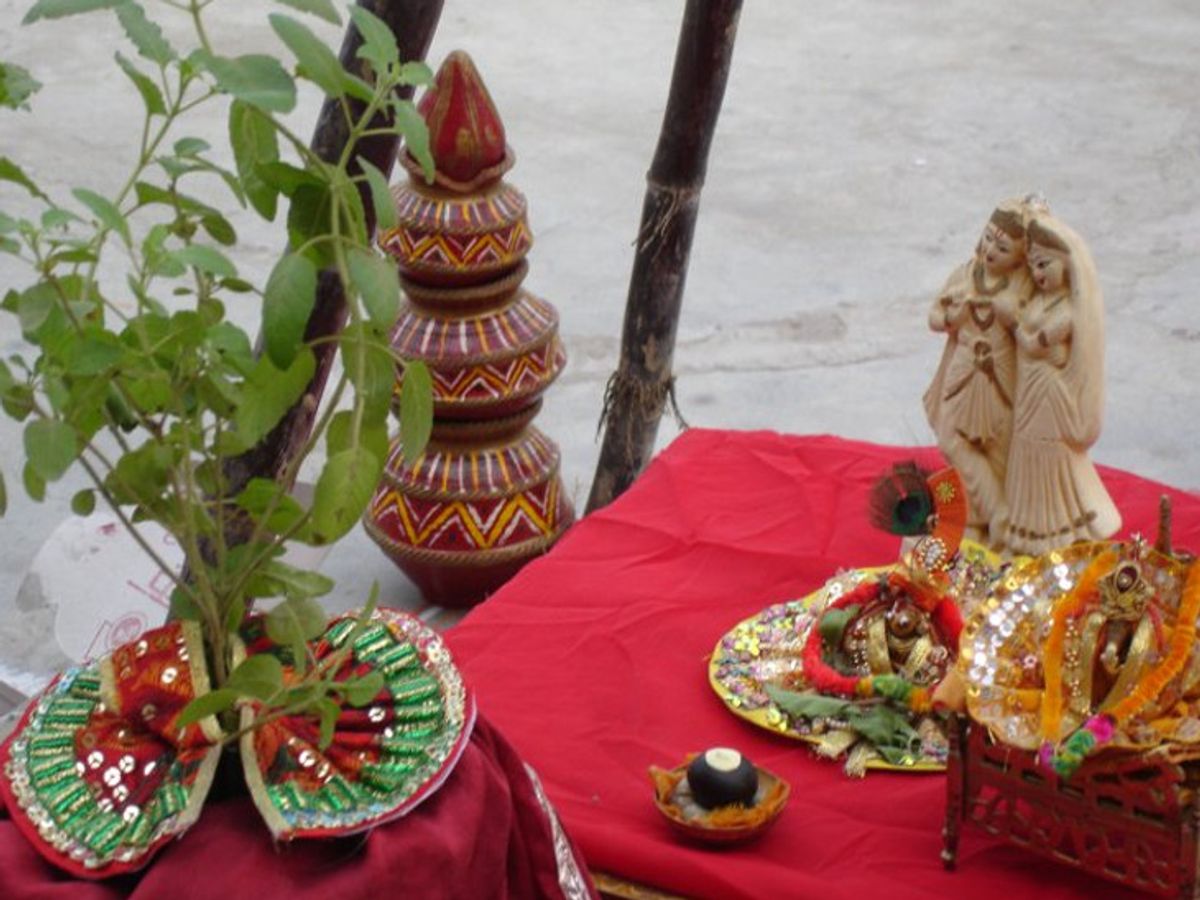 |
| A glimpse of Tulsi Vivah |
Significance of Tulsi Vivah?
This ceremonial festival marks the beginning of the sacred and auspicious events all across India which mainly include weddings. It is believed to bring prosperity in terms of health and stability in relationships. Apart from religious obligation, the Tulsi plant is also used across all households for its great medicinal properties.
Importance of Tulsi Plant
According to National Center for Biotechnological Information,
Tulsi has a unique combination of actions that include: Antimicrobial (including antibacterial, antiviral, antifungal, antiprotozoal, antimalarial, anthelmintic), mosquito repellent, anti-diarrheal, anti-oxidant, anti-cataract, anti-inflammatory, chemopreventive, radioprotective, hepato-protective, neuro-protective, cardio-protective, anti-diabetic, anti-hypercholesterolemia, anti-hypertensive, anti-carcinogenic, analgesic, antipyretic, anti-allergic, immunomodulatory, central nervous system depressant, memory enhancement, anti-asthmatic, anti-tussive, diaphoretic, anti-thyroid, anti-fertility, anti-ulcer, anti-emetic, anti-spasmodic, anti-arthritic, adaptogenic, anti-stress, anti-cataract, anti-leukodermal and anti-coagulant activities.
These pharmacological actions help the body and mind cope with a wide range of chemical, physical, infectious, and emotional stresses and restore physiological and psychological function.
With such a wide range of herbal properties is it crystal clear that the Vedic Sages knew the benefits of this plant and why it is a personification of the Goddess and why it is worshipped in the Hindu culture.
Tulsi Vivah Date and Time 2022
- Start: 6:08 PM, Saturday, 5 November.
- End: 5:06 PM, Sunday, 6 November.





0 Comments